The Social Media Anxiety Paradox
Despite being constantly connected on social media with hundreds of 'friends', teens today report higher levels of anxiety and isolation than any previous generation.This isn't just 'regular' anxiety happening online: it's a new type of anxiety that didn't exist 15 years ago.It is fueled by the pressures of constant comparison, performing for algorithms, the permanence of online content, and the relentless, 24/7 nature of social media where worth is measured in likes and followers.


The Always-On Burnout Phenomenon
The conversation around work has shifted. It's no longer just about being 'burnt out from work', but 'burnt out from being always-on'.
This new form of burnout isn't caused by overwork in the traditional sense.Instead, it stems from the blurring of boundaries between work and home, the lack of mental transition time, constant availability expectations, and the amplified perfectionism of a digitally documented work life.As a result, people are experiencing a unique kind of exhaustion that traditional solutions like vacations or setting boundaries can't fix, because the 'always-on' culture persists. It's a new type of burnout for a new way of working.
The Digital Identity Crisis
Previous generations had a single, consistent identity across different areas of their lives.Today, we manage multiple digital personas across platforms like Instagram, TikTok, LinkedIn, Twitter/X, and Discord, each a slightly different version of ourselves.This fragmentation raises the question: which one is the 'real' you? This creates a unique form of identity confusion for digital natives, who are not just 'finding themselves' but managing multiple selves at once.This constant performance is exhausting, fueled by the pressure of a permanent digital footprint, algorithmic feedback, and peer comparison, contributing to mental health challenges we are only beginning to understand.


The Parent's Dilemma
If you're a parent worried about your teen's digital life, you already know the frustration. You've watched them scroll for hours, seen them shaken by online conflict, and tried the standard advice - talk more, set limits, tell them to log off.Most of it doesn't land.
Here's why it often fails: the digital environment your teen is navigating wasn't designed with their wellbeing in mind. It was designed for engagement - measured in minutes held, notifications opened, and attention captured.
When you tell a teen to "just log off," you're asking them to opt out of a system engineered to make opting out hard.
That doesn't mean the situation is hopeless. It means the conversation needs to change.Understanding how the system works - the design choices, the psychological hooks, the reasons "just five more minutes" turns into two hours - puts you and your teen on the same side of the problem, instead of on opposite sides of it.
The most useful thing a parent can do isn't more monitoring. It's better understanding.
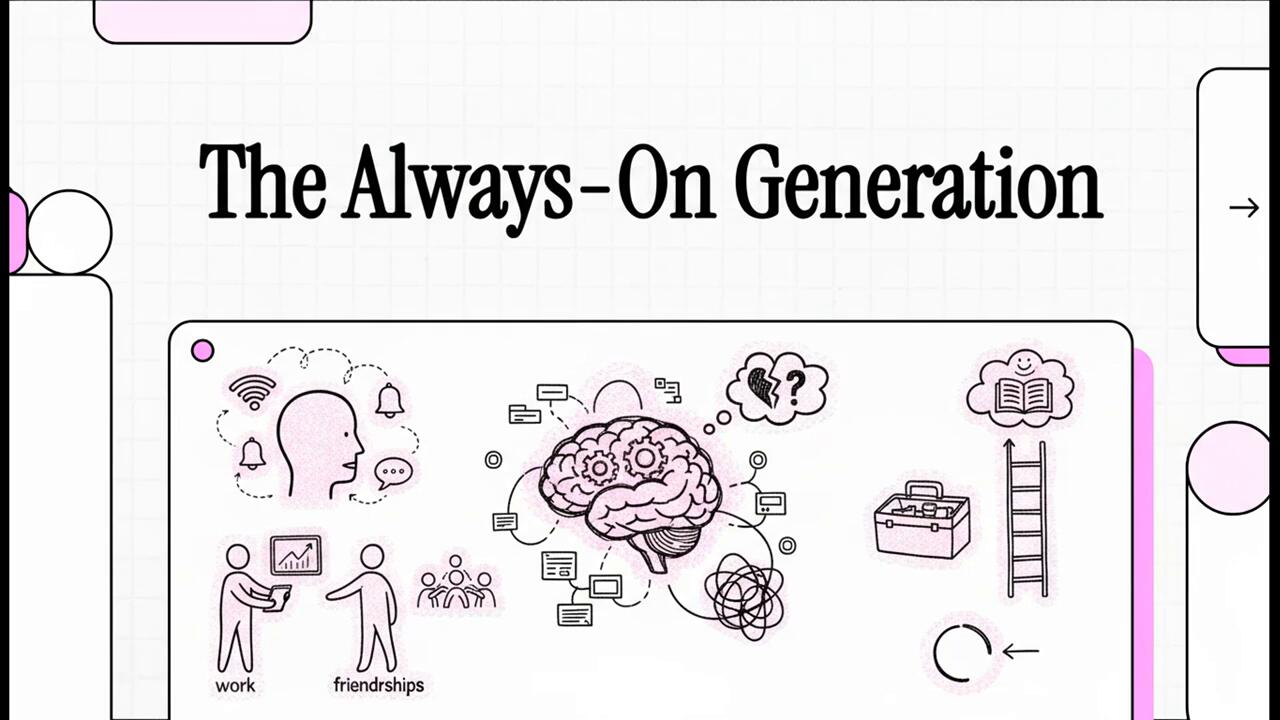
Check our "The Always-On Generation" informative video